
Why portable AI eye screening matters for diabetic retinopathy
Most people living with diabetes never get a retinal check. Here is how smartphone-based screening with LuneraiScan changes that.
Diabetic retinopathy (DR) damages the blood vessels at the back of the eye. In its early stages it has no symptoms, which is exactly why it is so dangerous: by the time vision blurs, damage is often permanent.
The screening gap
According to the International Diabetes Federation, 13.9 million people live with diabetes in Bangladesh, and roughly one in three adults with diabetes is at risk of DR. Yet an estimated 90% of DR-related blindness can be prevented with early detection. The problem is access: traditional fundus cameras are expensive, bulky and found mostly in specialist hospitals.
What changes with a phone
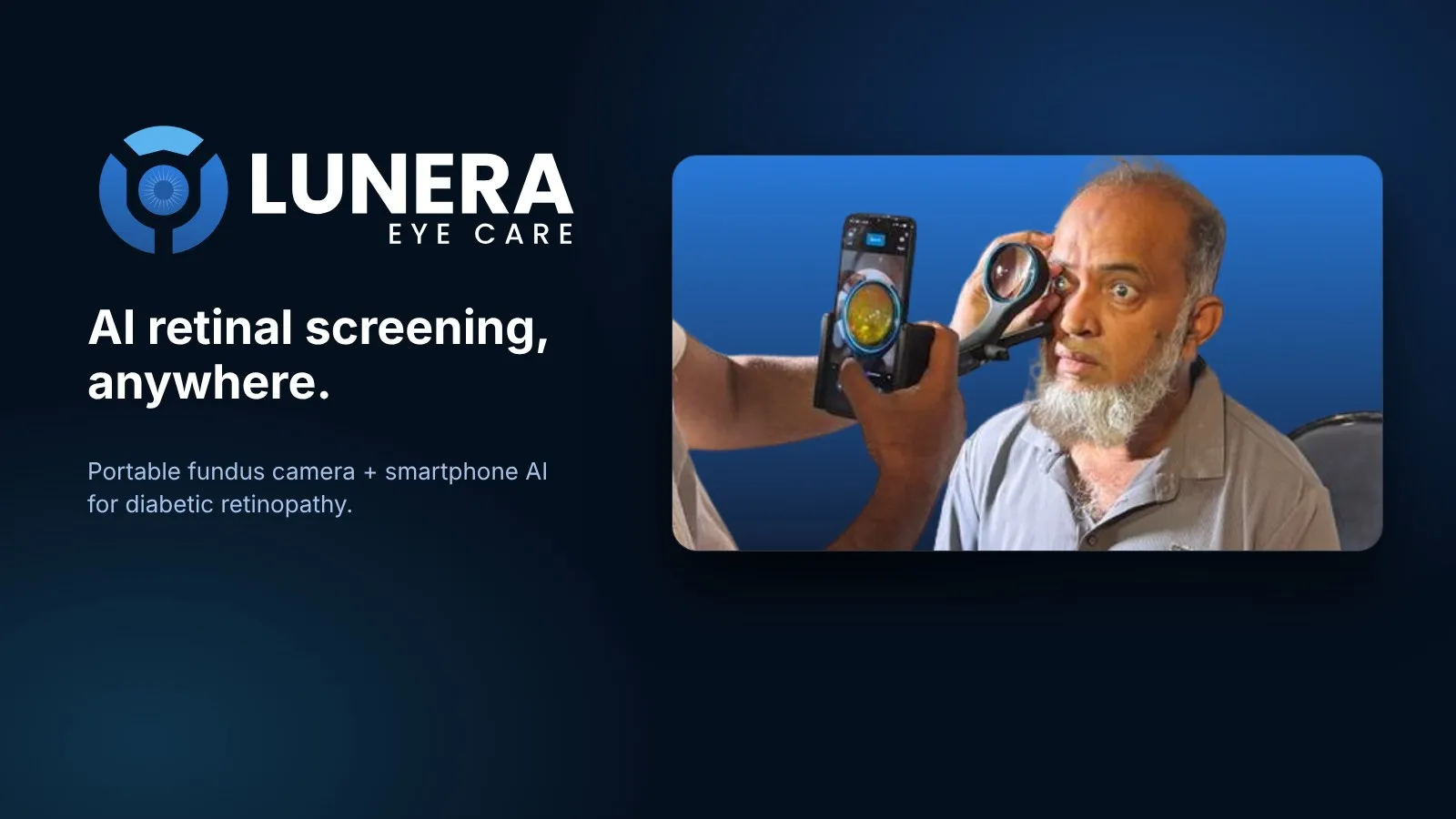
LuneraiScan pairs the Lunera Fundus Cam, a lightweight smartphone attachment, with our Android app and AI models:
- Capture — a health worker attaches the camera and the app guides an auto-capture of the retina.
- Analyse — the AI screens the image for signs of DR and other retinal conditions.
- Report — a PDF report is ready in minutes, so the patient can be referred straight away.
Because the app is offline-first, screening works in rural camps and pharmacies with poor connectivity; records sync securely later.
Built with clinicians
LuneraiScan is delivered with our sister concern Lunera Eye Care, which provides training and on-site support. It is a screening tool — diagnosis and treatment decisions remain with qualified clinicians.
Interested in bringing screening to your clinic or programme? Get in touch.
 Featured in this postLuneraiScanAI-powered portable eye screening